
How I Started Building My Email List From Zero (And What I Wish I Knew First)

I want to be upfront with you: I am still building my email list. I am not writing this from the other side of a six-figure launch. I am writing this from the middle — a few months in, a small but growing list, and a much clearer head than when I started.
That’s exactly why this post is worth reading. Most email list guides are written by people who already have 50,000 subscribers telling you what worked for them years ago. This is what it actually looks like to start from zero right now, in 2026, with no audience and no budget.
Here is what I got wrong, what I fixed, and what I wish someone had told me on day one.
I Waited Way Too Long to Start
The first mistake I made was waiting until everything was “ready.”
I had the blog. I had the domain. I had the hosting set up. But I kept telling myself I needed more posts first, a better design first, a freebie first. So I did nothing.
That cost me months. Every visitor who came to the site during that time — and left — is gone forever. I had no way to stay in touch with them.
The truth is there is no perfect moment to start capturing email addresses. The moment your site is live is the moment you should have a form on it. Even if you only get one subscriber a week, that is one person who chose to hear from you. That compounds.
The Tool Decision Almost Stopped Me
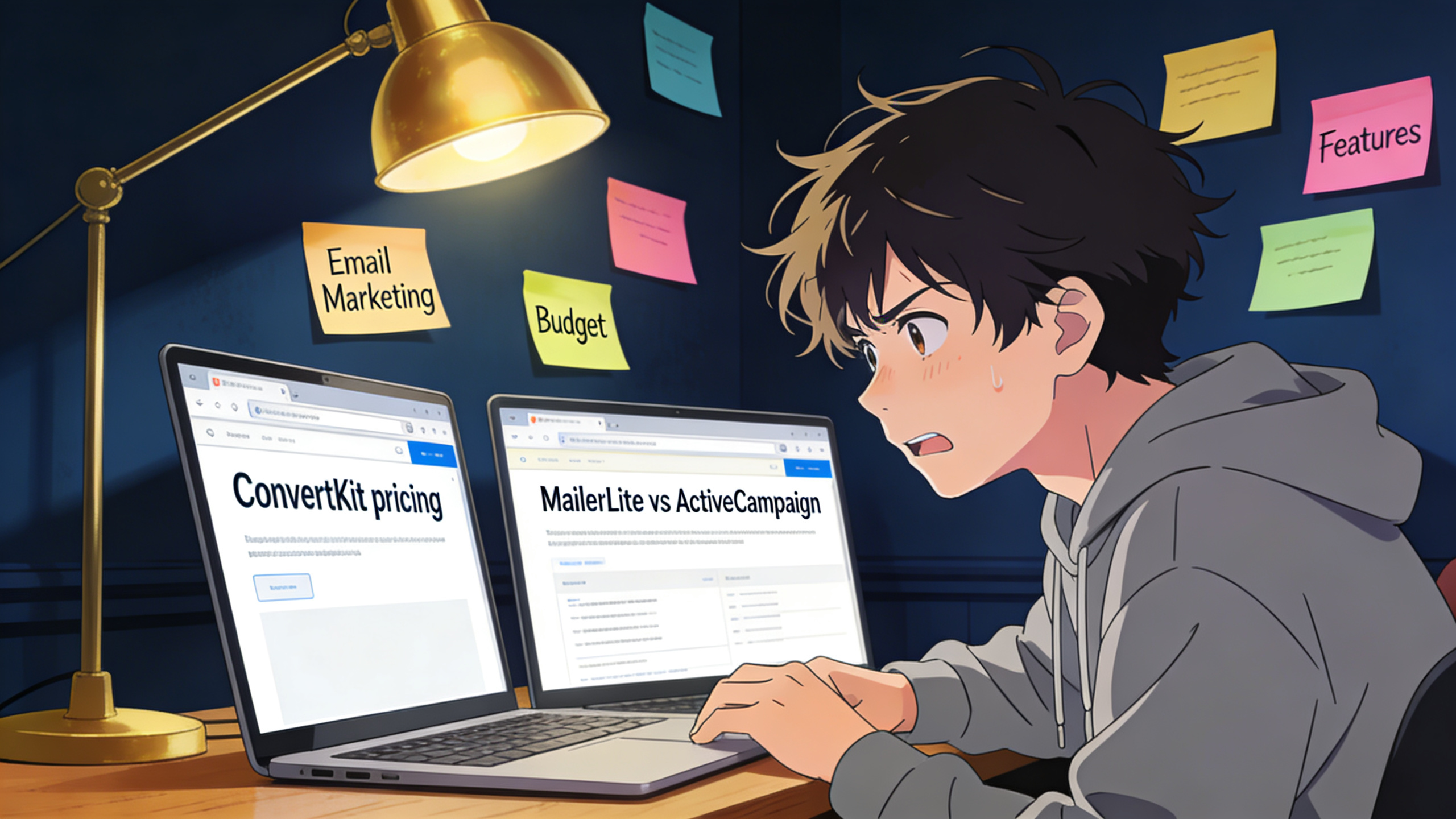
When I finally decided to start, I fell into the trap of researching email tools for two weeks instead of actually building anything.
ConvertKit. MailerLite. ActiveCampaign. Klaviyo. Everyone online had a different opinion, and every tool had a free tier with a catch. I kept reading comparison articles that all said the same thing and never gave me a clear answer.
What I eventually did: I installed FluentCRM directly on my WordPress site. It runs inside my existing setup, stores my subscribers in my own database, and costs a flat annual fee instead of a per-subscriber monthly charge. For a new list, that matters. The per-subscriber pricing on most email platforms means your cost goes up as you grow — right when you start making money, your tool bill also goes up.
FluentCRM keeps it flat. I own the data. No third-party platform can delete my list or suspend my account.
That said — FluentCRM requires WordPress. If you are on Systeme.io or a hosted platform, their built-in email tools work fine to start. The point is: pick one tool and start. Do not spend two weeks comparing.
I Chose Not to Offer a Freebie — Here’s Why
Every email list guide tells you to create a lead magnet. A free PDF, a checklist, a mini-course. Give something away to get the email address.
I chose not to do that. And it was a deliberate decision.
Here is the problem with freebies: they attract freebie seekers. People who want the free thing and never open another email. Your open rates drop, your deliverability suffers, and you end up cleaning the list every few months anyway.
I want people on my list who actually want to hear from me. People who see the site, read a post, and decide they want more of that. No bribe required.
My subscribe page says exactly what they are signing up for: honest breakdowns of what is working and what is not as I build this online business. No fluff. That is the offer.
Is my list growing slower because of this? Probably. But the people on it are real. When I send an email, someone actually reads it.
What the Numbers Look Like Right Now
I am going to be honest about where I am because I think fake-it-till-you-make-it content is exactly the problem with this niche.
The list is small. I am in the early stages. The blog has been live with consistent content for a few months now, the YouTube channel launched recently with four videos, and subscribers are coming in slowly but consistently.
What I track every week:
- New subscribers added
- Open rate on the last email sent
- Unsubscribes
I do not obsess over the total number. I focus on the open rate because that tells me if the people already on the list actually care. A 40% open rate on a small list beats a 10% open rate on a massive one.
The 3 Things I Wish I Knew First

1. The form placement matters more than the form design.
I spent time making my subscribe form look good. What actually moved the needle was putting it in the right place — inside blog posts near the end, and as a dedicated strip in the header on every page. Not just on a separate “subscribe” page that nobody visits.
2. Your first 100 subscribers are the hardest.
After 100, you have social proof. You have a list worth sending to. You have real data on what gets opened. The first 100 require patience and consistency more than strategy.
3. Send an email before you think you’re ready.
I waited until I had “enough” subscribers to send my first email. That was another mistake. Even five subscribers deserve an email. Writing to them forces you to find your voice, figure out what you want to say, and build the habit of showing up consistently.
Where to Start If You Are at Zero Today
You do not need a big audience. You do not need a freebie. You do not need a fancy email platform.
You need:
- A form on your site — in the header, inside posts, on a dedicated page
- An email tool connected to it — FluentCRM if you are on WordPress, the built-in tools if you are on Systeme.io or similar
- One email sent per week — short, honest, useful
That is the whole system. Everything else is noise.
If you want to see the exact setup I use — the tools, the email sequence, the subscribe page — it is all inside The Playbook. That is the course I built while building this business. Every step I took is documented there.
Start before you are ready. Your future self will thank you.
Wealth Diagram
Personal finance, passive income, and building wealth on your own terms.