I Built a 7-Module Online Course Without Showing My Face (Here Is How)
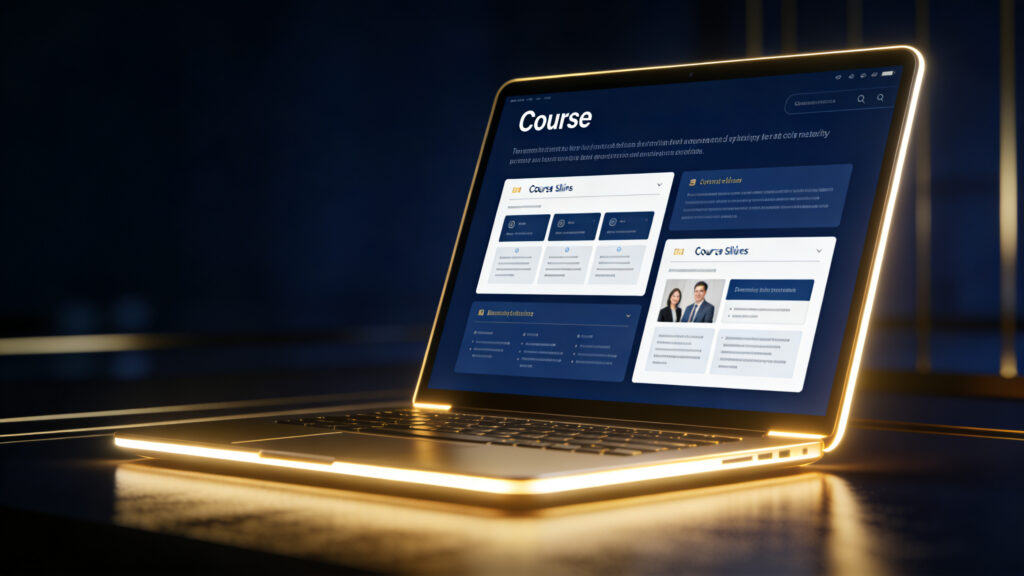
There is a moment when you realize that writing blog posts is not enough. You are putting out content, maybe getting some traffic, but nothing you have built feels like a real product. It feels like a collection of pages sitting on the internet, waiting to be found. I hit that moment earlier this year, and it pushed me to do something I had been putting off for a long time — build an actual course.
Not an ebook. Not a PDF checklist. A proper, structured, video-based course that someone could buy and work through from start to finish.
This is the honest story of how I did it, what I used, what went wrong, and what the finished thing actually looks like.
The Decision to Build Something Real
I had been writing about passive income for a while. Blog posts, how-to guides, breakdowns of different business models. The content was fine. People read it. But I kept thinking about the gap between someone reading a post and someone actually building a business.
A blog post gives you information. A course gives you a path. Those are different things, and I wanted to build the second one.
The idea was straightforward: take everything I knew about building a blog, growing an email list, creating a digital product, and selling it on Whop — and turn it into a step-by-step system. Something a complete beginner could follow without needing a big budget, a big audience, or any prior experience.
The problem was figuring out how to actually make it.
The Problem With the Obvious Approach
The obvious way to build a course is to sit in front of a camera, record yourself talking, and upload it to a platform. Simple enough in theory. In practice, it ruled me out immediately.
I do not have a camera setup. I do not have a YouTube channel with thousands of subscribers to cross-promote to. And honestly, I had no interest in putting my face on the internet tied to an anonymous business I was building from scratch. That was not the direction I wanted to go.
There is also the voice issue. I have an accent. Not a thick one, but enough that I have sat through enough recordings of myself to know it is distracting when paired with production that is not quite polished. Even if I had wanted to record myself, the accent combined with a mediocre microphone and no editing experience was not a recipe for something I would feel confident selling.
So I had to find a different way.
The Solution That Actually Worked
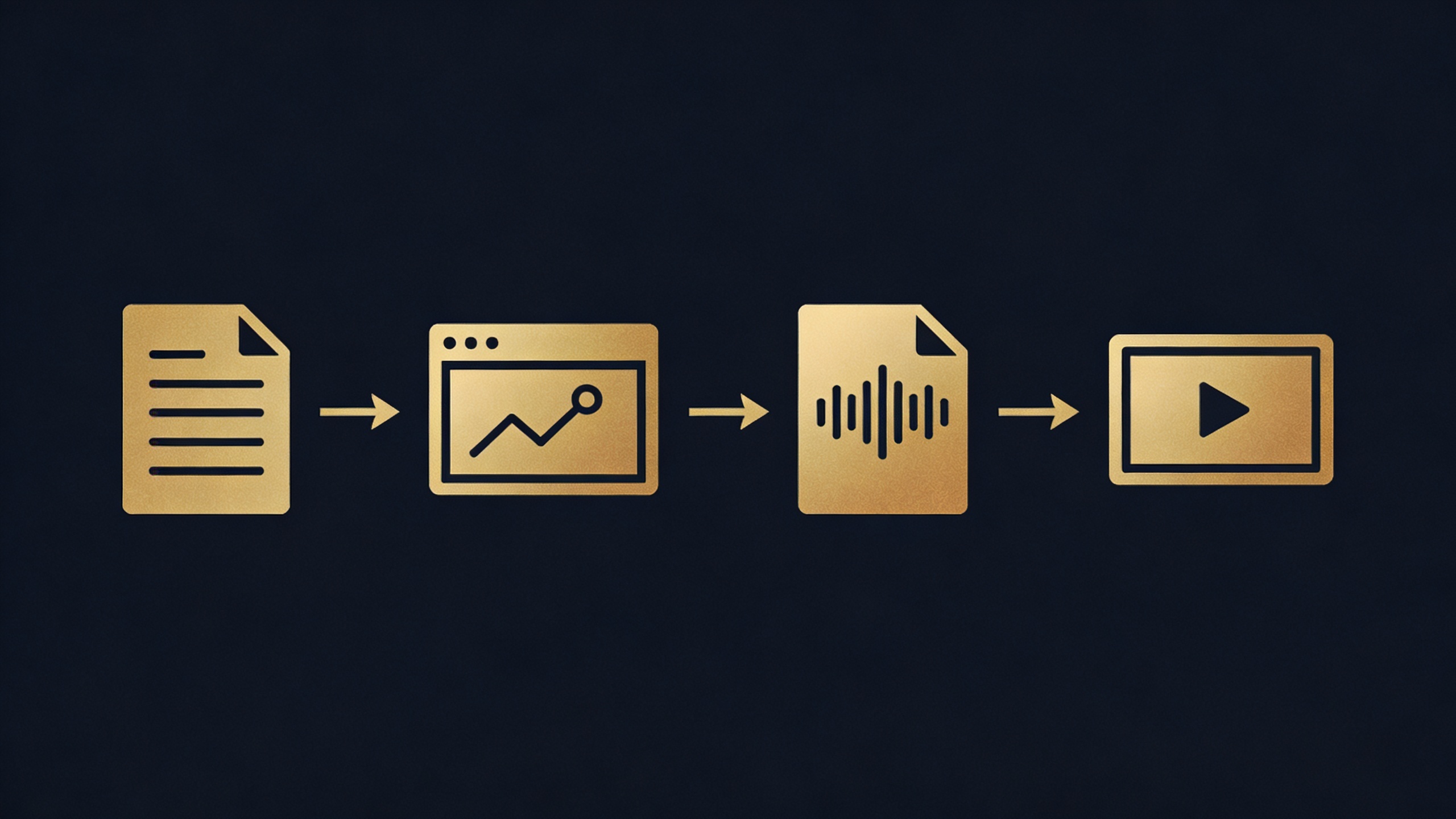
The answer came from putting three tools together. It sounds technical, but the logic is simple.
First, I used AI to write the scripts. Each lesson had a structured script — an opening, the core content, and a clear takeaway. The AI did the heavy lifting on the initial draft, and I reviewed and edited each one to make sure it matched the way I actually think and write.
Second, I used python-pptx to build the slides automatically from those scripts. Dark navy background, gold accents, clean layout. It looks professional. It looks intentional. It does not look like something thrown together in an afternoon, which is what matters when someone is deciding whether to trust you enough to buy something from you.
Third, I used ElevenLabs for the voiceover and ffmpeg to stitch everything together into finished video files. The AI voice handles all the narration, which means the accent issue is completely irrelevant. The voice is clear, consistent, and professional across every single lesson. Nobody hears me. They hear the content, which is exactly how it should be.
The whole pipeline was automated. Script goes in, finished video comes out. That meant I could focus my energy on the actual content — making sure each lesson was accurate, useful, and in the right order — rather than on recording and editing.
Building the Seven Modules
The course ended up at seven modules and 84 lessons. That number sounds large until you map out everything someone actually needs to know to build this kind of business from nothing.
The first module is Foundation. It covers the mindset and the business model — why a blog plus email list plus digital product is one of the most durable income setups you can build, and how the pieces connect.
Module two is Build Your Blog. This is the practical, step-by-step setup — hosting, WordPress, SEO basics, writing content that gets found. No theory, just the actual steps.
Module three is the Digital Product. How to figure out what to create, how to validate the idea without spending money first, and how to package it in a way people want to buy.
Module four is the Whop Store. This is where the selling happens. Whop is the platform I use and recommend, and this module walks through setting up a storefront, writing the sales page, and getting the product live.
Module five is the Email List. Most people skip this step and regret it later. This module covers the opt-in setup, the lead magnet, and how to grow a list even when you are starting from zero traffic.
Module six is the Email Sequence. Getting people on your list is only half the job. This module is about what you send them — the welcome sequence, the value emails, and how to write in a way that builds trust and eventually converts without feeling pushy.
Module seven is Scale and Automate. Once the foundation is in place, this module covers how to grow it, what to systematize, and how to start moving toward something that runs without you having to touch it every day.
The Real Talk About How Long It Took
Here is something I want to be honest about: the automation made the production side faster, but it did not make the course easy to build.
Every script needed to be reviewed. Every slide deck needed to be checked for formatting issues, awkward line breaks, and content that made sense on screen as well as in audio. Every video needed to be watched before it went anywhere near the upload queue.
Eighty-four lessons means 84 videos to check. That is time. It is not glamorous work. It is sitting at a laptop going through content one lesson at a time, fixing the things that slipped through, and making sure the whole thing holds together as a coherent experience.
I am not saying that to complain. I am saying it because there is a version of this story that makes it sound like you press a button and a course appears, and I do not want anyone walking away with that impression. The tools removed the recording barrier. They did not remove the need to actually care about the quality of what you are building.
What the Course Actually Teaches
The core promise of Build a Passive Income Business From Scratch is this: you can build a real online income without a big audience, without a camera, without an existing following, and without a large budget.
That is not a tagline. It is the literal premise of the course, and it is built into every module. The person this is for is someone who has thought about building something online but kept hitting the wall of not knowing where to start or feeling like the barrier to entry was too high.
The course shows them the exact path. Blog to email list to digital product to Whop storefront. That is the system. The 84 lessons are the instruction manual for building it.
Where to Find It
If any of this sounds like something that would actually be useful to you, the course is available on Whop. It is part of The Playbook, which is the main resource hub I have built for people who want to do this kind of work seriously.
You can find it at The Playbook. No face, no fluff, no inflated promises. Just the system I built and the lessons that walk you through it.
Wealth Diagram
Personal finance, passive income, and building wealth on your own terms.