
How to Sell Digital Products Without a Following (Starting From Zero)
The biggest lie in the online business world is that you need an audience before you can start selling. You don’t. Thousands of people make consistent income from digital products every month with no social media following, no email list, and no YouTube channel. They do it with a blog and a search engine.
This guide is for anyone who wants to sell digital products but doesn’t have — or doesn’t want — an audience to sell to first. By the end, you’ll understand exactly how people find and buy digital products from complete strangers online, and what you need to set up to make that happen for you.
Why You Don’t Need a Following to Sell
Most people think the only way to sell digital products is to grow an Instagram account, build a TikTok following, or grind YouTube for a year before anyone buys from you. That model works — but it’s not the only model, and it’s not the fastest one for most beginners.
The alternative is search-based traffic. People type a problem into Google. Your blog post comes up. They read it, trust you, and buy your product. No following required. The buyer found you — you didn’t have to chase them.
This is the core difference between social-based and search-based selling:
- Social — You push content out hoping your followers see it. You need volume and consistency, and the platform owns your reach.
- Search — Someone already wants what you’re offering. They searched for it. Your post is there. The sale is a natural next step.
Search-based selling is slower to set up but far more passive. A blog post you wrote six months ago can still send buyers to your product every single day without you doing anything extra.
Step 1 — Create a Product That Solves One Specific Problem
The biggest mistake beginners make with digital products is trying to create something comprehensive. They want to cover everything, answer every question, include every scenario. That instinct kills more products than anything else — because it leads to products that never get finished.
The rule for your first digital product is simple: solve one problem for one type of person.
Not “get better at money.” Something like “track your monthly spending in under 10 minutes.” Not “lose weight.” Something like “a 4-week home workout plan for people who hate the gym.”
The more specific the problem, the easier it is to sell — because the buyer immediately recognizes themselves in it. Specific products also require less content to create. A 20-page PDF that solves one real problem is more valuable than a 200-page guide that tries to do everything.
What formats work for beginner creators:
- PDF guides — easy to create in Google Docs or Canva, sell for $9–$27
- Templates — spreadsheets, Notion boards, email swipe files — high perceived value, low effort to create
- Mini-courses — 5 to 10 short lessons, hosted on a free platform like Whop, sell for $27–$97
- Checklists and action plans — one-page deliverables that help someone do one thing — surprisingly easy to sell at $7–$17
Pick a format that takes you less than a weekend to finish. A product you launch beats a product you perfect.
Step 2 — Set Up a Place to Sell It (Free Options Included)
You don’t need a custom storefront, a payment gateway, or a developer. There are platforms that handle everything — file delivery, payment processing, and customer management — for free.
Two options that work well for beginners with no audience:
Whop — Free to list. Takes a small percentage when you make a sale. You can host PDFs, courses, communities, and templates all in one place. It also has a built-in marketplace, which means some buyers will find your product directly on Whop without you needing to send them there. That’s passive discovery — rare and valuable for someone with zero following.
Systeme.io — Free plan includes a product page, checkout, file delivery, and an email list. It’s a complete system for selling digital products without any technical setup. If you want everything in one place with no transaction fees on the free tier, this is a strong choice.
Pick one. Get your product listed with a price, a clear title, and a short description that focuses on the outcome the buyer gets — not what’s inside the product. “Stop guessing where your money goes” sells better than “12-page personal finance tracker PDF.”

Step 3 — Write One Blog Post That Targets Your Buyer
This is the step that most “sell digital products” guides skip entirely. They tell you to build a social following. This guide is going to tell you something different: write a single blog post that ranks for what your buyer is already searching.
Your buyer has a problem. Before they buy a solution, they search for answers. That search is your opportunity.
If you’re selling a budgeting spreadsheet template, your buyer might be searching:
- “how to track monthly expenses”
- “simple budget template for beginners”
- “why do I run out of money every month”
Write a post that answers one of those searches in full. Don’t hold back information to “save it for the product.” Give real value. At the end of the post — or naturally within it — mention your product as the shortcut for people who want the work already done for them.
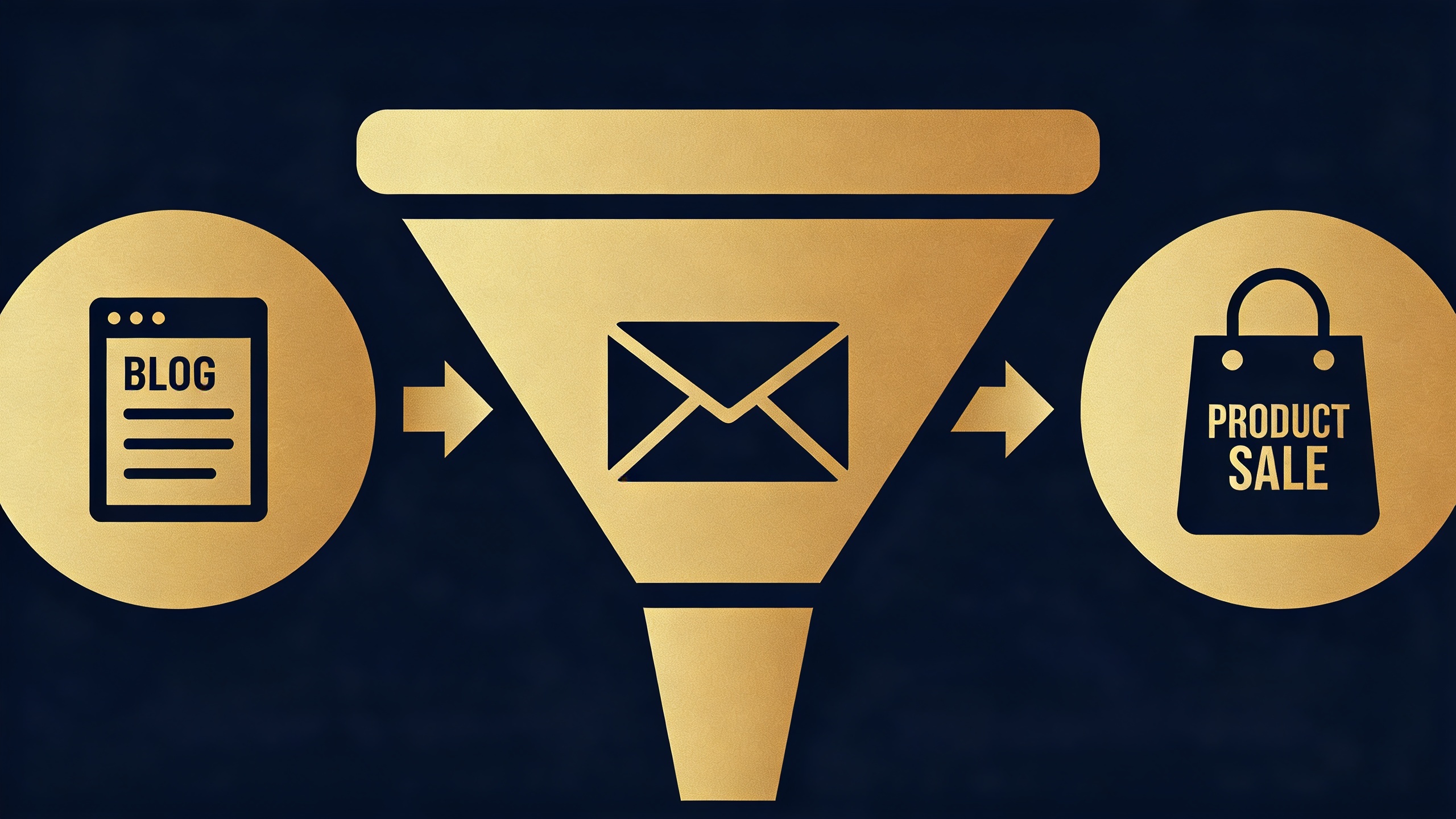
That’s the conversion. Reader finds the post → gets value → sees your product → buys because you already proved you know what you’re doing.
You don’t need ten posts to start. One well-targeted post is enough to get your first sale. It needs to be thorough, helpful, and aimed directly at the question your buyer is typing into Google.
Step 4 — Connect Your Blog Post to Your Product
Every blog post you write should have one job beyond providing value: send the right readers toward your product.
There are three natural ways to do this without it feeling like a sales pitch:
- In-line mention — Somewhere in the middle of the post, mention that you built a tool or resource that handles this for them. One sentence, one link. No pressure.
- End-of-post CTA — After the reader has gotten value and trusts you, offer the next step. “If you want this done-for-you, here’s the template I built.”
- Free to paid upgrade — Offer a free version (checklist, one-page guide) that collects their email. Follow up with the paid product. This is slightly more complex but converts extremely well because you’ve already given them something useful before asking for money.
The goal is to make the product feel like the logical next step — not a separate pitch. A reader who just got real value from your post is already primed to trust you. Don’t waste that moment by hiding your product or burying the link.
Step 5 — Build the Email List in Parallel
Even without a following, you can build a tiny email list from day one — and that list becomes your real asset over time.
The mechanic is simple: offer a free resource (a mini checklist, a one-page guide, a short email sequence) in exchange for an email address. Put the opt-in form on your blog. Every reader who subscribes is someone you can email when you launch new products, publish new posts, or want to promote an affiliate offer.
You don’t need a complicated funnel. A simple offer like “Get the free version of this template — drop your email below” is enough. Systeme.io’s free plan includes email marketing, so you can set this up without paying for a separate tool.
Here’s the compounding effect nobody talks about: once you have a list of even 100 people who found you through a specific blog post, you know exactly what they care about. That makes your next product easier to create, easier to position, and far more likely to sell — because you built it for someone specific, not for everyone.
What “No Following” Really Means for Your Timeline
Without a social following, you won’t make a sale on day one. The search-based approach takes time — typically 2 to 4 months before your blog posts start getting indexed and sending consistent traffic. That’s the trade-off.
But here’s what you get in return: compounding, passive results. A post you write today will still be ranking and converting 18 months from now. A social post you publish today will be dead in 48 hours.
Realistic timeline:
- Week 1–2: Product created and listed. Blog post written and published. Email opt-in live.
- Month 1–2: Post indexed by Google. First trickle of organic traffic. Possibly your first sale.
- Month 3–6: Traffic growing. Email list building. Product sales becoming more regular.
- Month 6+: You add a second post targeting a related search. Each new post adds to the compounding effect.
The people who fail at this aren’t the ones who make mistakes. They’re the ones who stop after month two because nothing happened yet. The results come in month three, four, and five — for the people who kept going.
The Mindset Shift That Changes Everything
Most people think about selling digital products as: build audience → earn trust → sell product. That’s the social media model. It works, but it requires you to be visible, consistent, and willing to grow a personal brand in public.
The search-based model flips that: solve the problem in writing → get found by people searching for it → earn trust through the content itself → sell the product as the natural next step.
You don’t need a name. You don’t need a face. You don’t need a personal brand. You need a real problem, a real product, and a post that connects the two.
That’s the whole system. The following comes later — after the product is already selling.
If you want a complete walkthrough — how to build the blog, create the product, set up the email list, and get everything working together — I put the full system into a step-by-step course called The Playbook.
It’s built for beginners who want to do this anonymously, with no face on camera, no existing audience, and no paid tools required. Every module covers one part of the system in the exact order you need to build it.
You’ve already read how it works. The next step is building it. Check out The Playbook here and see if it’s the right fit for where you are right now.
Wealth Diagram
Personal finance, passive income, and building wealth on your own terms.